
Free Deodorant (And What We Learned)
It starts with a label. You pick up the deodorant you’ve used for a decade and actually read what’s in it. Then you start asking questions. What does aluminium actually do in my antiperspirant? Why has my skin been irritated for years? Could what I’m applying every morning be something I should be concerned about? That was our journey. Here’s everything we learned.
What Aluminium Actually Does (And Why That’s a Problem)
Most conventional antiperspirants rely on aluminium salts — compounds like aluminium chlorohydrate or aluminium zirconium tetrachlorohydrex — as their active ingredient. These salts work by physically plugging the sweat glands in your underarm, preventing perspiration from reaching the skin’s surface.
This is where the distinction between a deodorant and an antiperspirant matters. A deodorant targets odour-causing bacteria. An antiperspirant blocks sweat itself. Sweating is a fundamental biological process that regulates body temperature, removes metabolic waste products, and supports the skin’s microbiome. When we artificially block sweat glands every single day, we’re interfering with a system that has been functioning in humans for millions of years.
The Aluminium Research Landscape
The scientific debate around aluminium in antiperspirants is ongoing. The International Agency for Research on Cancer (IARC) and several independent studies have investigated potential links between aluminium-based antiperspirant use and conditions including breast cancer, Alzheimer’s disease, and kidney function impairment. The evidence is not yet conclusive — but when a substance is being applied to skin every day, in proximity to breast tissue and lymph nodes, the precautionary principle suggests choosing an aluminium-free alternative is sensible.
The Other Ingredients Lurking in Your Antiperspirant
Aluminium is often not the only concern. Conventional antiperspirants regularly contain:
- Parabens — synthetic preservatives that are endocrine disruptors, mimicking oestrogen in the body. Detected in breast tumour tissue in multiple studies.
- Phthalates — often concealed within ‘fragrance’ on ingredient lists, known to interfere with hormone function.
- Propylene Glycol — a penetration enhancer that helps other ingredients absorb deeper into skin tissue.
- Synthetic Fragrances — a catch-all term masking potentially hundreds of undisclosed chemical compounds, many of which are skin sensitisers.
- Triclosan — an antibacterial agent that disrupts the skin’s microbiome and is classified as a possible endocrine disruptor by the US EPA.
What the Transition Actually Feels Like
We’re not going to sugarcoat this: the first few weeks of switching from a conventional antiperspirant to a natural deodorant can be uncomfortable. Here’s what to expect, honestly.
| Weeks 1–2 | The Adjustment Period
Your body has been having its sweat glands chemically blocked — potentially for years. When you remove that blockage, the glands begin to function normally again, which can initially mean more perspiration than usual. Some people also notice a temporary increase in odour as the skin’s microbiome rebalances. This is completely normal and temporary. |
| Weeks 3–4 | Things Start to Settle
Sweat levels begin to normalise as your body adjusts. The microbiome shifts — natural deodorants work by targeting odour-causing bacteria rather than blocking sweat, so over time the bacterial composition of your underarm skin actually changes for the better. |
| Week 5+ | The New Normal
Most people find that after the adjustment period, natural deodorant works at least as well — often better — than conventional antiperspirant for odour control. Skin irritation typically resolves completely. Underarm skin often becomes noticeably softer. |
Conventional Antiperspirant vs Aluminium-Free: An Honest Comparison
| Feature | Conventional Antiperspirant | Aluminium-Free Organic Deodorant |
| Controls odour | Yes | Yes |
| Stops sweating | Yes (blocks glands) | No (allows natural function) |
| Contains aluminium salts | Yes | No |
| Free from parabens & phthalates | Usually no | Yes (certified organic) |
| Yellow underarm staining | Common (aluminium + sweat) | No |
| Supports skin microbiome | Disrupts it | Supports it |
| Skin irritation risk | High (especially post-shave) | Very low |
| COSMOS certified organic | No | Yes (Naturally COS) |
Our Aluminium-Free Organic Deodorant
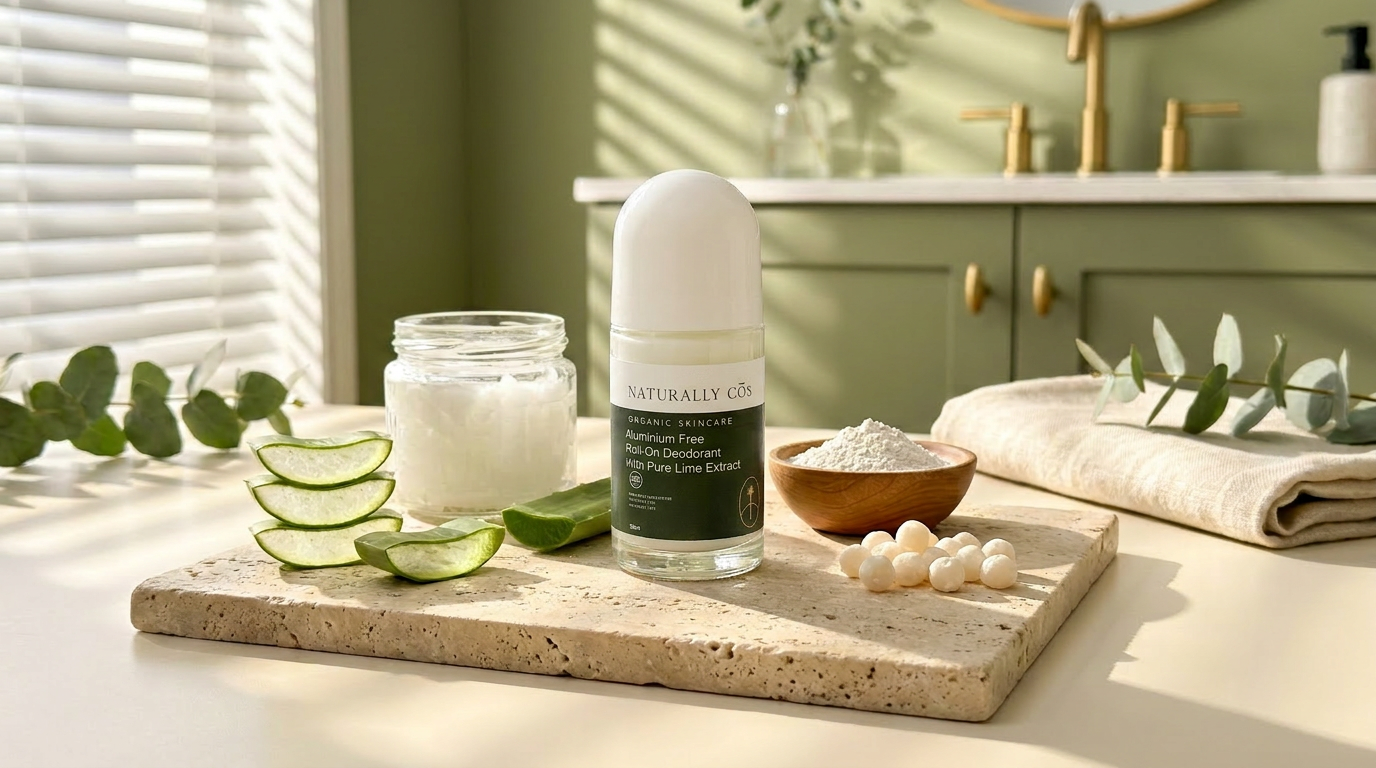
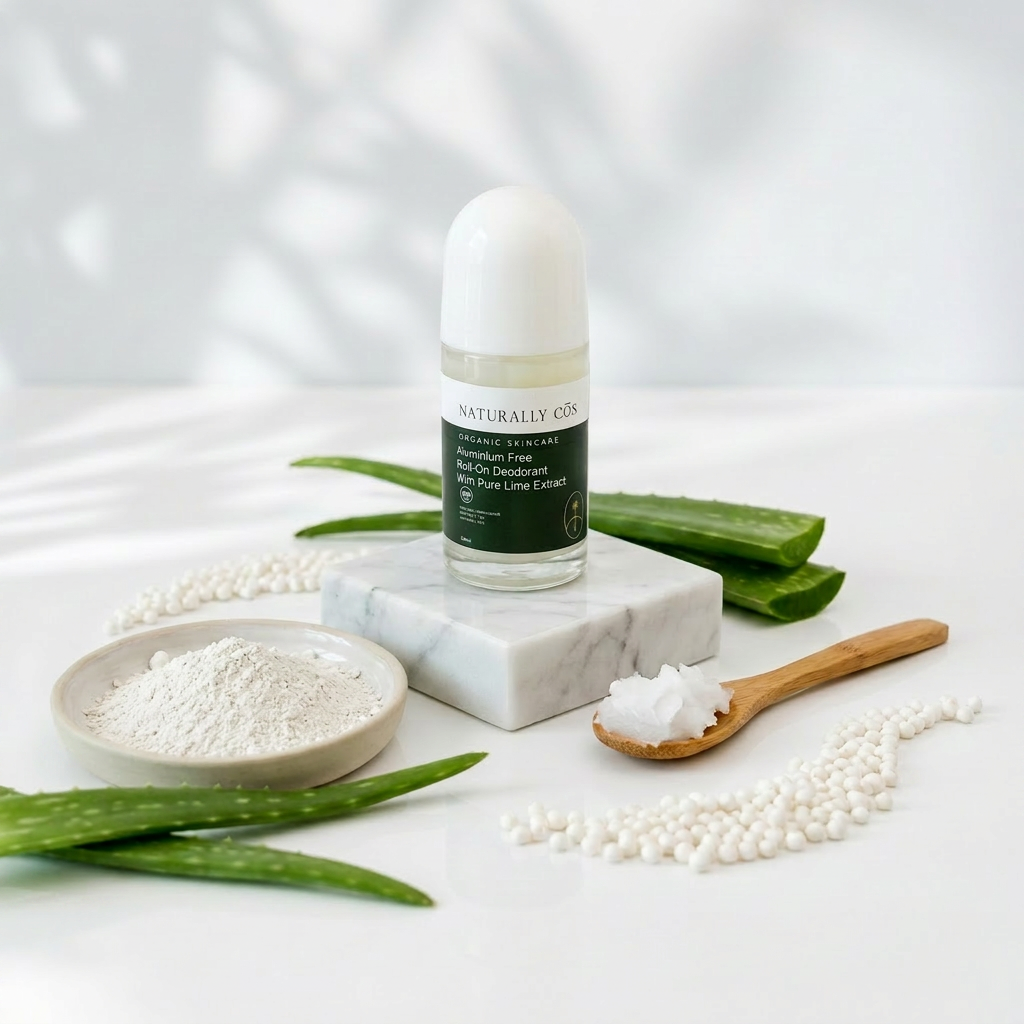
Formulated with COSMOS Certified Organic ingredients and handcrafted on the Gold Coast. Instantly neutralises underarm odour and absorbs wetness without ever blocking a pore.
Key actives: Organic Tapioca · Australian Kaolin Clay · Aloe Vera · Organic Coconut Oil
Completely free from: Aluminium Salts · Parabens · Phthalates · Propylene Glycol · Hormonal Disruptors · Carcinogens
Shop now: naturallycos.com.au/product/new-aluminium-free-organic-deodorant/
Why Australian Kaolin Clay Is a Game-Changer
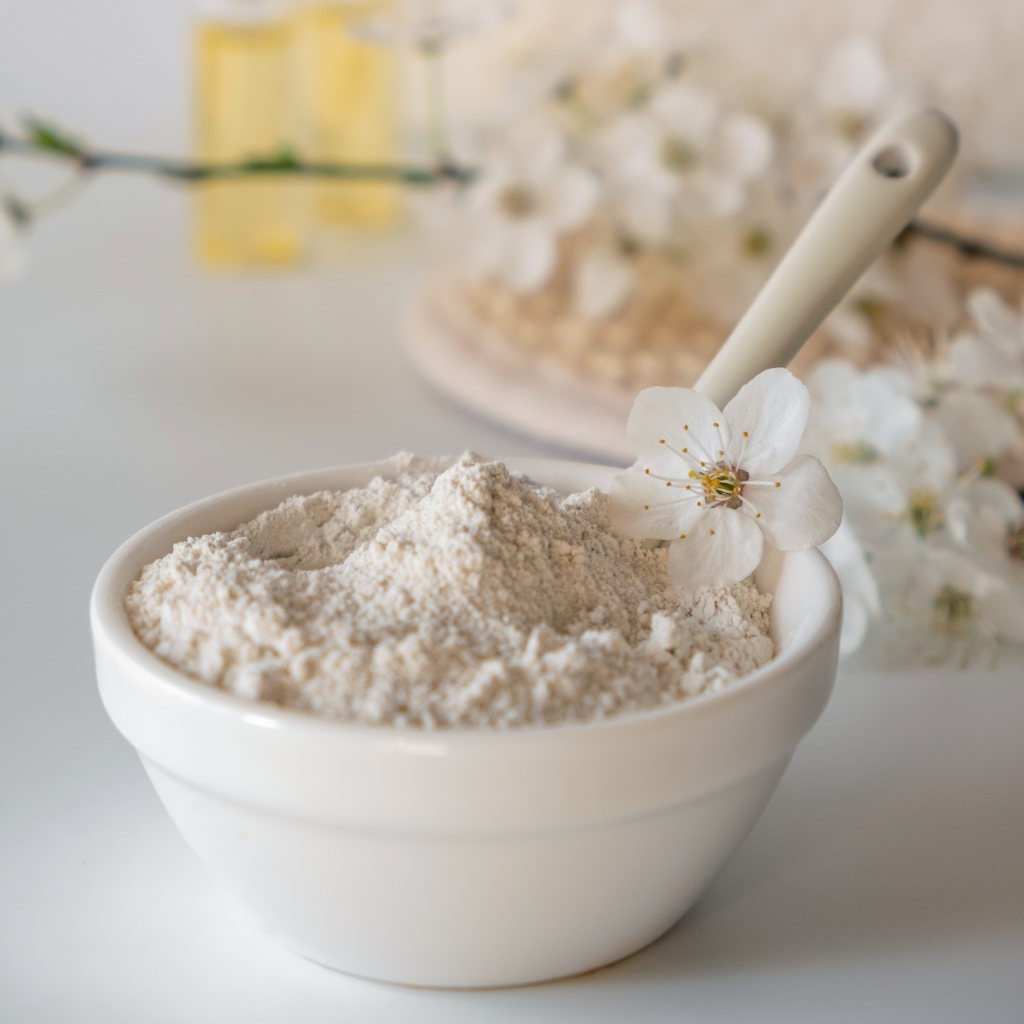
Unlike baking soda — which is effective at neutralising odour but can cause skin irritation, particularly on freshly shaved underarms — Australian Kaolin Clay is a gentle, finely milled mineral clay that absorbs moisture without disrupting the skin’s pH. Its porous structure makes it exceptionally good at absorbing excess moisture while allowing the skin to breathe, and it’s gentle enough for daily use on sensitive skin.
The Unexpected Benefits We Didn’t Anticipate
No more yellow stains. The yellowing of white shirts is caused by a chemical reaction between aluminium compounds and sweat — not by sweat alone. Without aluminium, this reaction doesn’t happen.
Softer underarm skin. The chronic low-grade irritation that comes with aluminium salts and synthetic fragrances resolves quickly. Underarm skin typically becomes noticeably less sensitive and more comfortable.
Less odour over time, not more. As your skin microbiome adjusts, the composition of bacteria on the skin shifts. Many people find that after two to three months, they need deodorant less frequently than with conventional antiperspirant.
Is It Safe to Use During Pregnancy?
Aluminium-free, certified organic deodorant is widely considered the appropriate choice during pregnancy. Our COSMOS-certified formula contains nothing that isn’t plant-derived, mineral, or organic — making it a comfortable choice throughout pregnancy and breastfeeding. As always, consult your GP or midwife if you have specific health concerns.
Making the Switch
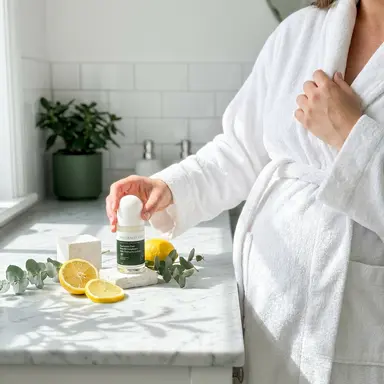
Stop the conventional antiperspirant, give your skin a day or two to breathe if you can, and start applying your natural deodorant to clean, dry underarms each morning. Be patient through the adjustment period — it’s your body normalising, not failing.
For more information on the science behind aluminium and personal care ingredients, the Campaign for Safe Cosmetics is an excellent starting point. Locally, CHOICE Australia has published accessible guides on reading cosmetic labels.
The Bottom Line
The shift to aluminium-free deodorant isn’t about perfection. It’s about making an informed, considered choice that respects your body’s natural processes and reduces your daily chemical load.
We made the switch. We built a product we’re proud of. If you’re ready to do the same, our aluminium-free organic deodorant is right here — made with care, right here in Australia.


