
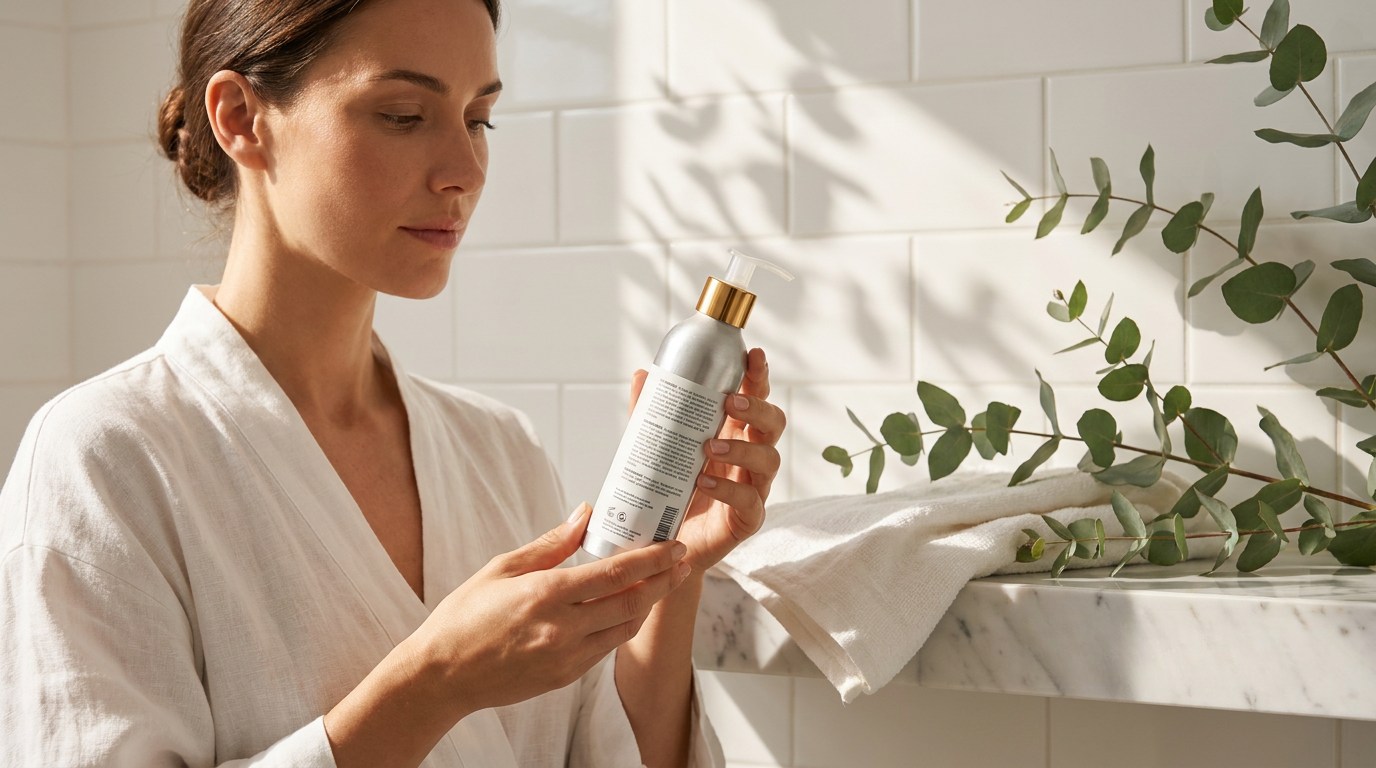
How to Actually Read a Skincare Label
You’re standing in the beauty aisle, bottle in hand, squinting at a wall of words that looks more like a chemistry exam than a product description. Sound familiar?
You’re not alone — and it’s not your fault. Skincare labels are intentionally standardised using a system called INCI (International Nomenclature of Cosmetic Ingredients), which uses scientific Latin and English names for every ingredient, regardless of what the brand calls it on the front of the pack.
The good news: once you know the rules, reading a skincare label is actually pretty straightforward. Here’s everything you need to know.
What Is the INCI List?
The INCI is the official list of every ingredient inside a product, printed in a standardised format. It’s required by law in Australia, the EU, the US, and most regulated markets worldwide, and it exists to ensure transparency and consistency across brands, countries, and languages.
It was developed and is maintained by the Personal Care Products Council, and every legitimate cosmetic brand must use it. If a product doesn’t have one, that’s a red flag.
The Golden Rules of Ingredient Lists
Rule 1: Order = Concentration
Ingredients are listed from highest to lowest concentration. The first ingredient makes up the largest proportion of the formula; the last ingredients are present in the smallest amounts.
This means the first five ingredients tell you the most about what a product actually is. If the first ingredient is water and the second is a cheap filler, the product is probably mostly water and filler — regardless of what’s highlighted in the marketing.
Note: ingredients present at under 1% concentration can be listed in any order after the main ingredients — which is why you’ll sometimes see powerful actives near the bottom of a list.
Rule 2: Long Names Aren’t Necessarily Scary
This is one of the biggest misconceptions in skincare. A long, unpronounceable name doesn’t automatically mean an ingredient is harmful. For example:
- Butyrospermum Parkii Butter = shea butter
- Sodium Hyaluronate = hyaluronic acid (a moisturising hero)
- Tocopherol = vitamin E
- Rosa Canina Fruit Oil = rosehip oil
- Aloe Barbadensis Leaf Juice = aloe vera
Latin botanical names follow the format: genus + species + plant part + preparation. Once you recognise this pattern, naturally-derived ingredients become much easier to spot.
Rule 3: The Front of the Pack is Marketing — the Back is the Truth
Brands invest heavily in making their hero ingredient sound irresistible on the front label. But the INCI list on the back reveals the full picture. A product marketed around, say, vitamin C might list Ascorbic Acid near the very bottom — meaning it’s present in a tiny, potentially ineffective amount.
When evaluating a product, always flip it over and find the ingredient that’s being promoted. Where does it appear in the list?
Ingredients to Know and Love
Here are some powerhouse ingredients worth looking for:
- Glycerin (Glycerol): A humectant that draws moisture into the skin — one of the most evidence-backed hydrating ingredients available
- Sodium Hyaluronate: The salt form of hyaluronic acid; holds moisture effectively and penetrates well
- Niacinamide: Vitamin B3 — supports barrier function, reduces redness, and improves skin texture
- Ceramides: Lipids that repair and reinforce the skin barrier
- Panthenol: Provitamin B5 — deeply soothing and hydrating, great for sensitive skin
- Plant oils (Rosa Canina, Simmondsia Chinensis, Argania Spinosa): Rosehip, jojoba, and argan — nourishing and packed with fatty acids
Ingredients Worth Questioning
Not all ingredients are created equal. Here are some to look out for, especially if you have sensitive or reactive skin:
- Sodium Lauryl Sulphate (SLS) / Sodium Laureth Sulphate (SLES): Harsh foaming agents that can strip the skin barrier and irritate the scalp. A key reason Naturally COS formulates its entire haircare range to be sulphate-free.
- Parfum / Fragrance: A single ingredient on a label can represent dozens of undisclosed compounds — and is one of the leading causes of contact sensitisation. Look for products explicitly labelled allergen-free rather than just ‘unscented’.
- Parabens (Methylparaben, Propylparaben etc.): Preservatives that some consumers prefer to avoid, particularly during pregnancy. All Naturally COS products are pregnancy-safe and free from parabens.
- Alcohol Denat: Denatured alcohol used as a solvent — can be drying and disruptive to the skin barrier with regular use.
What COSMOS Certification Actually Means
When you see COSMOS-certified on a product, it means the ingredients and formulation have been independently verified against strict organic and natural standards — covering everything from ingredient sourcing to manufacturing processes to packaging.
All Naturally COS products use COSMOS-certified ingredients, sourced from Fair Trade farmers. That means when you read our ingredient list, you can trust that what’s there has been selected with care — and what’s not there was left out intentionally.
Handy Tools to Help You Decode Labels
Ingredient literacy takes time to build — but these resources can help you get there faster:
- INCI Decoder (incidecoder.com) — search any INCI name for a plain-English explanation and safety rating
- CosDNA — analyse full ingredient lists and flag potential irritants or acne-triggering ingredients
- Think Dirty App — scan product barcodes for a breakdown of ingredient safety
The Naturally COS Approach
We believe you should never have to guess what’s in your skincare. Our ingredient lists are short, purposeful, and built around certified organic, allergen-safe ingredients that genuinely support skin and hair health — not cheap fillers dressed up with clever marketing.
Next time you pick up one of our products, flip it over and take a look. We think you’ll like what you find.


